
How to Split Time Between Railay and Tonsai on a Short Stay
If you only have one to three nights, the smart move is not to treat Railay and Tonsai as separate trips. Pick the calmer sleep base that fits your budget, then cross over with a plan for beaches, bars, and climbing time.

How to Split Time Between Railay and Tonsai on a Short Stay
Railay and Tonsai sit close enough together that many visitors talk about them as if they are the same place. On a short stay, that assumption wastes time. The beaches feel different, the room options feel different, and the best base depends on whether you care more about a prettier shoreline, a cheaper bed, or a quieter night.
A practical short stay works better when you separate your sleep base from your day plan. Use Tonsai if you want the more laid-back, budget-friendly side. Use Railay if you want easier access to the headline beaches or you know you want to spend most of your time around Railay West and Phra Nang.
How to get from Tonsai Beach to Railay Beach?
A video guide on how to walkfrom TonsaiBeach toRailayBeach.
- Channel: 強森
Found a helpful clip from 強森 if you want to watch it on YouTube.

How to Split Time Between Railay and Tonsai on a Short Stay
Start by choosing your sleep base, not your postcard beach
On a short stay, your room location matters more than people expect because it shapes how much backtracking you do. If your priority is a quieter evening, a cheaper bed, and a more relaxed backpacker-climber atmosphere, Tonsai is usually the better base.
If you already know you want to spend most of your daylight hours around Railay West, Phra Nang, or the east-side bars, staying on Railay can make sense. Budget-conscious travelers who still want to stay on the Railay side should look first at Railay East rather than expecting the west side to be the cheap option.
- Choose Tonsai first if your trip is budget-led, climbing-led, or you want a more low-key evening scene.
- Choose Railay East if you want to stay on Railay but still care about cost.
- Do not book the prettiest-looking beach on the map without checking whether you actually want to sleep in the busiest part of the peninsula.
How to use one night without feeling rushed
With only one night, keep the plan narrow. Arrive, settle into your room, then spend your best daylight window at the beach that matters most to you instead of trying to cover every corner. Most travelers who want the classic scenery should make time for Railay West or Phra Nang and leave the rest for a slower return trip.
If you sleep in Tonsai, cross over for the headline beach time, then come back for a quieter evening. If you sleep on Railay, keep the evening simple and avoid turning the stay into a forced checklist.
- One night is best for one beach block, one meal zone, and one evening base.
- Skip the viewpoint or lagoon unless that is the main reason you came.
- Do not plan a late scramble between areas after dark just to tick both names off your list.
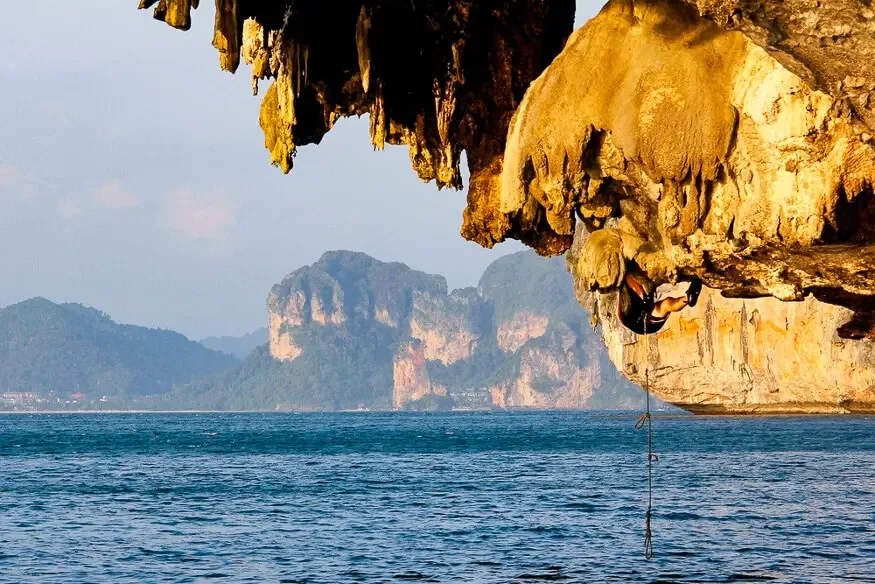
How to Split Time Between Railay and Tonsai on a Short Stay
What changes when you have two or three nights
Two or three nights give you enough room to separate beach time from activity time. One day can stay focused on Railay West and Phra Nang, while another can stay slower around Tonsai or be built around climbing windows and long lunches.
This is also where a split-time mindset helps most. You do not need to move hotels to get the benefit. You only need to be honest about what each side does better: scenic beach time on the Railay side and a calmer, cheaper overnight rhythm on the Tonsai side.
- Use day one for arrival and your highest-priority beach.
- Use day two for either climbing or a slower cross-peninsula beach day.
- Use day three only if you want margin for weather, tide timing, or a late departure.
When to avoid the lagoon and viewpoint on a short trip
The viewpoint and lagoon are not throwaway add-ons. They require time, energy, and comfort on steep, rope-assisted terrain. If you are not confident on rough climbs or the weather is poor, this is an easy place to lose half a day and come back frustrated or muddy.
On a short stay, treat that climb as a deliberate choice. It makes sense for confident, active travelers who want the challenge. It does not make sense as a default box to tick between beach sessions.
- Skip it if you have only one night and your real goal is beach time.
- Skip it in slippery conditions or if anyone in your group dislikes exposure or scrambling.
- Go early and commit the time only if the climb itself is part of the fun for you.
A simple planning rule that works for most first-time visitors
If you are unsure, sleep where the night feels easier and move where the daylight feels prettier. In practice, that usually means Tonsai for a cheaper, quieter base and Railay West or Phra Nang for the main beach window.
rule is not about saying one side is better than the other. It is about using each side for what it does best so your short stay feels intentional instead of scattered.
- Sleep for comfort, budget, and evening mood.
- Cross for scenery, swim time, or a specific activity block.
- Leave slack in the plan so a delayed boat, heat, or weather shift does not break the whole day.