
10 Must-Try Foods in Krabi — Authentic Southern Thai
A field-style guide to 10 Must-Try Foods in Krabi — Authentic Southern Thai for travelers based around Railay, Tonsai, Ao Nang, and nearby Krabi boat routes.
10 Must-Try Foods in Krabi — Authentic Southern Thai
- The ten southern dishes worth building a Krabi meal around
- 1. Kanom jeen nam gia — the southern noodle breakfast that fuels the day
- 2. Southern rice salad — crunchy, herby, and surprisingly light
- 3. Gaeng yom pla ra — the boldest curry in the south
- 4. Tom yum pla chon — a clear soup that refreshes between spicy courses
- 5. Hat Yai–style fried chicken — crispy skin, tender meat, zero fuss
- 6. Andaman seafood — sweet, firm, and simply prepared
- 7. Grilled and stir-fried squid — smoky bite or bold chili kick
- 8. Pounded shrimp chili paste — homestyle and deeply savory
- 9. Roti and pulled tea — a sweet finish with southern Muslim roots
- 10. Khanom la and babin — two southern sweets worth seeking out
- Decide whether a ten-dish food route fits a Railay or Tonsai base
- Map the boat, road, or walking links before committing to the full day
- Time the meals around heat, tide, crowds, and the last return options
- Budget the small costs that quietly change the day
- Know what to pack, what to skip, and what to confirm on site
- Choose the fallback plan if the full route starts to feel rushed
It helps you order just right.
Ultimate Krabi Food Tour 🇹🇭🔥 | Local Southern Eats & World-Famous Cave Restaurant
Many people say Krabi Province is a paradise for sea lovers — with crystal-clear water, stunning beaches, and countless islands ...
- Channel: Fatty Uncle Thailand - English
Found a helpful clip from Fatty Uncle Thailand - English if you want to watch it on YouTube.
10 Must-Try Foods in Krabi — Authentic Southern Thai
The ten southern dishes worth building a Krabi meal around
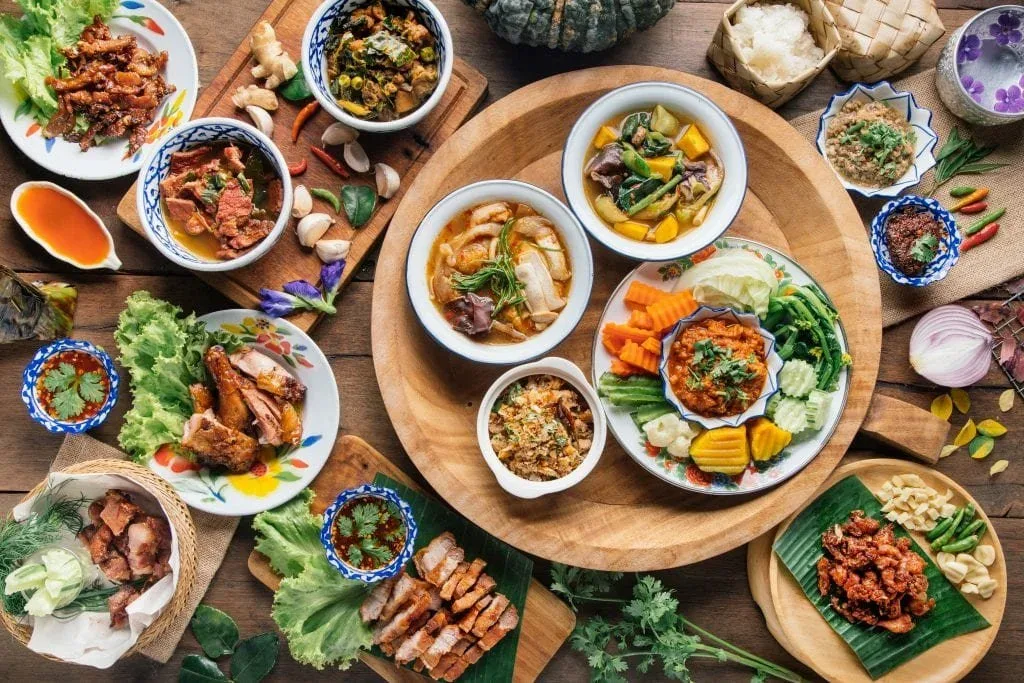
Before you pick anything, here's a shortcut for matching your appetite to the right plate. Every entry below includes how hot it runs and what flavors dominate, so you can balance a full day of eating rather than stacking heat after heat.
[object Object]
1. Kanom jeen nam gia — the southern noodle breakfast that fuels the day
This is the most recognizable southern spread you will find on a morning table. Thin rice noodles arrive under a thick, fragrant sauce built from ground fish and curry paste, with turmeric giving the broth its golden color and unmistakable perfume. The dish is served hot and carries real heat, so locals pair it with a plate of crisp raw vegetables alongside pickled mustard greens to cut through the richness.
Travelers often mistake it for a casual snack, but southerners treat it as a proper breakfast that sustains them through a long day. If you are rising early to catch a first boat from Tonsai or Railay, stopping for a bowl before you head out is exactly the kind of move that keeps your energy steady.
10 Must-Try Foods in Krabi — Authentic Southern Thai
2. Southern rice salad — crunchy, herby, and surprisingly light
Despite its name, this is not a simple tossed salad. Steamed rice is first combined with a fermented fish sauce that has been toasted until fragrant, then dressed with shredded vegetables, lemongrass, dried shrimp, and crushed roasted coconut. The result lands somewhere between savory and bright, with a gentle tang that keeps every bite feeling clean.
It works as a refreshing counterpoint when the rest of your menu leans heavy on coconut milk and chilies. People who prefer food that feels light rather than filling usually find this plate satisfying without weighing them down.
3. Gaeng yom pla ra — the boldest curry in the south
Fermented fish innards cooked into a thick curry paste create a dish that is loud on both salt and aroma. The pungency is impossible to ignore, and the heat runs high enough that even confident chili eaters should register their tolerance before ordering. Southerners revere this as one of the most authentic expressions of regional flavor, but visitors new to the cuisine often prefer a toned-down version that reduces both the salt intensity and the spice load.
If you want to try it, ask for a milder preparation and pair it with plain steamed rice to balance the punch.
4. Tom yum pla chon — a clear soup that refreshes between spicy courses
Tamarind and a sharp souring fruit give this broth its lively acidity, while firm, fresh seabass holds its shape in the clear liquid. The soup is neither heavy nor overly garlicky; instead it functions as a palate reset between richer, hotter dishes. A bowl of steamed rice beside it turns the broth into a complete, comforting meal.
It is especially useful when the afternoon sun feels relentless and your stomach wants something cooling rather than another coconut-heavy curry.
5. Hat Yai–style fried chicken — crispy skin, tender meat, zero fuss
The chicken arrives with a deeply fried, crackling exterior and juicy flesh underneath, finished with a shower of fragrant fried shallots. Sticky rice and a pungent dipping sauce complete the plate, creating a combination that appeals to adults and children alike. It is one of those southern staples that feels instantly familiar even if you have never tried it before.
Because the dish is straightforward and filling, it makes sense as a midday stop when you need something reliable before heading back toward the piers.
6. Andaman seafood — sweet, firm, and simply prepared
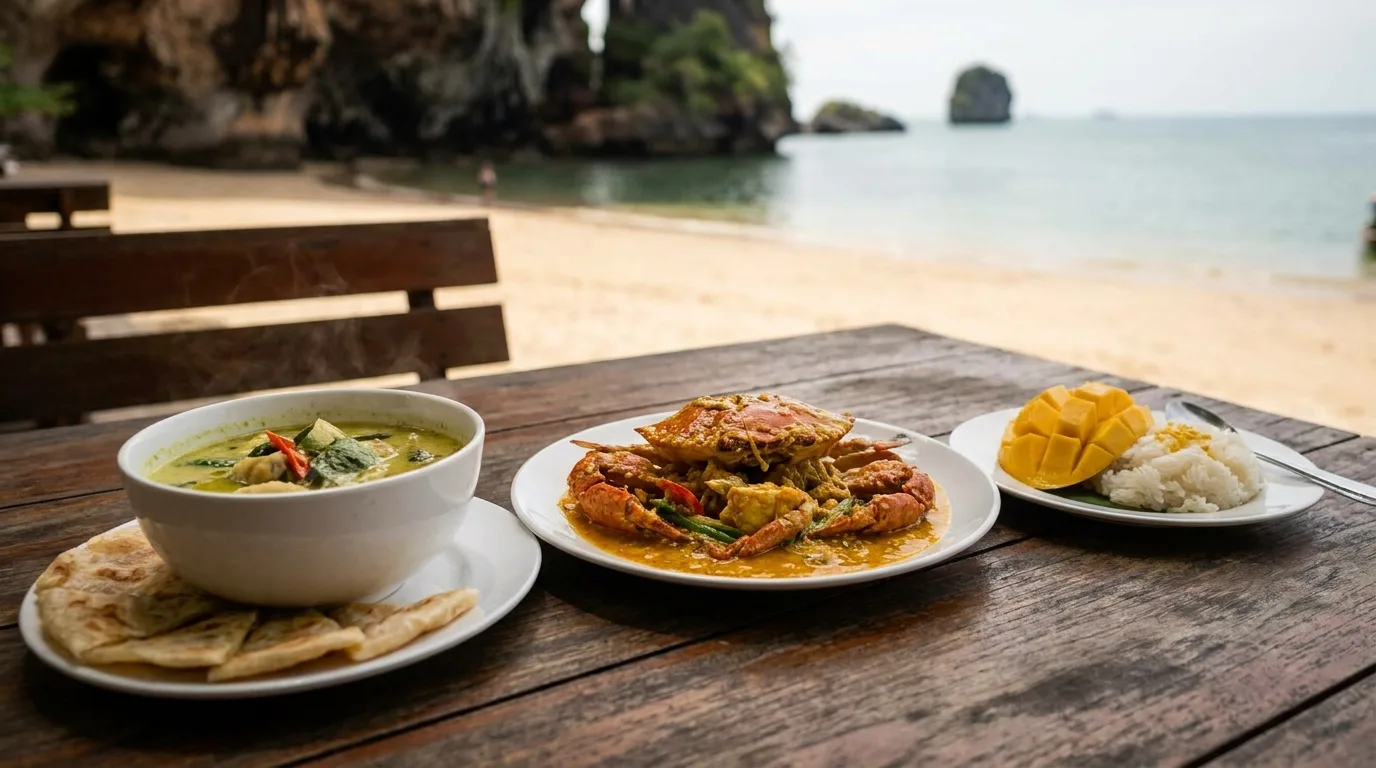
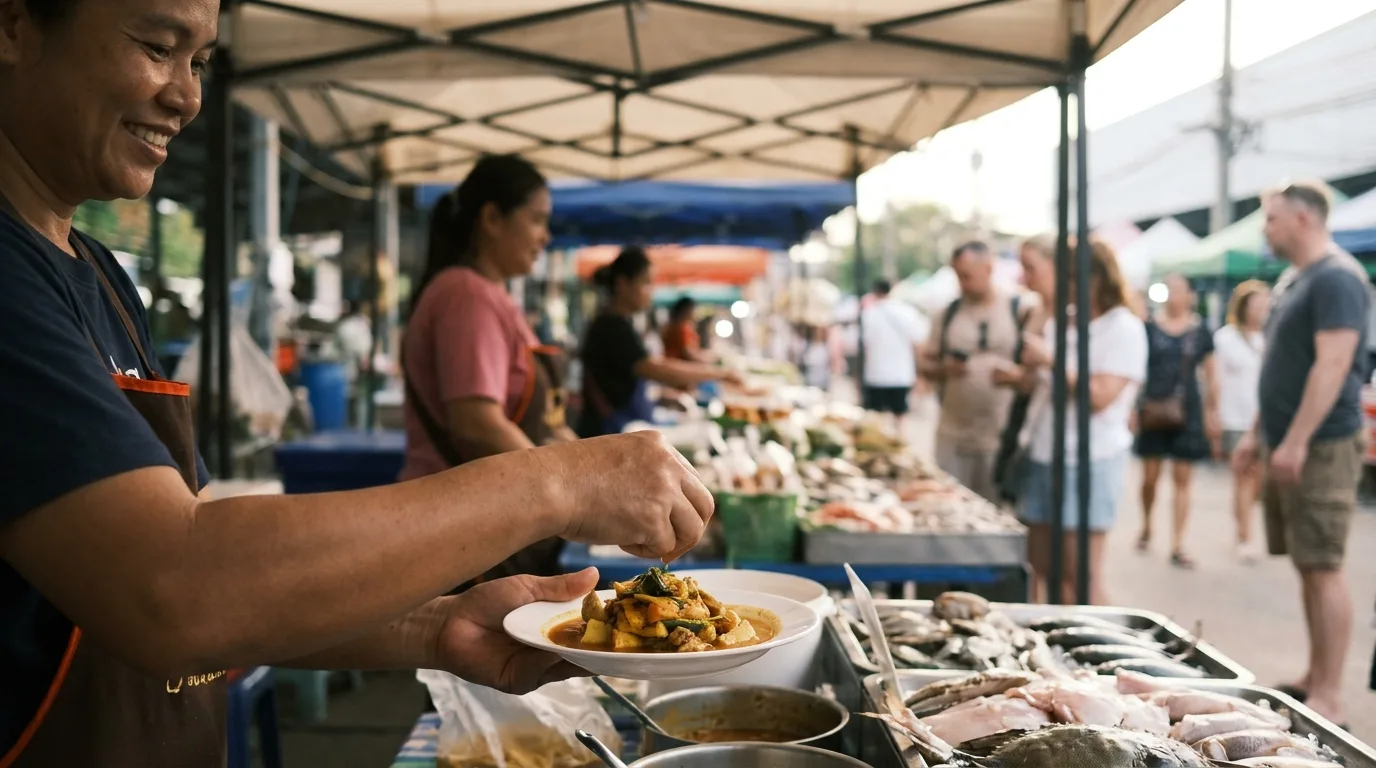
The Andaman coast delivers blue crab, prawns, and shellfish caught close to shore, so the natural sweetness and firm texture of the meat stand out without heavy seasoning. Steaming preserves that clean flavor, while grilling adds smoke and char. A spicy seafood dipping sauce adds heat and garlic when you want more kick.
Any visitor walking along the waterfront restaurants in Ao Nang or near the piers should treat fresh shellfish as an essential stop rather than an optional upgrade.
7. Grilled and stir-fried squid — smoky bite or bold chili kick
Fresh squid grilled over open flame develops a fragrant char while keeping a pleasantly bouncy texture. Stir-fried versions throw in a fierce chili paste that coats every curl in spice and salt. Both approaches appear on menus all along Krabi's coast, and both pair well with the same sharp dipping sauce used for other seafood.
If you prefer controlled heat, stick to the grill. If you want intensity, the stir-fried version delivers.
8. Pounded shrimp chili paste — homestyle and deeply savory
Shrimp are grilled on skewers until smoky, then transferred into a mortar and beaten into a coarse paste with chilies and salt. The texture is rustic, the flavor leans salty with a hint of sweetness and considerable smoke, and it is traditionally eaten alongside fresh greens and blanched vegetables. Southerners make this at home frequently, and it tastes best when paired with steamed rice.
It is not a delicate dish, but it is deeply rewarding if you enjoy robust, everyday cooking.
9. Roti and pulled tea — a sweet finish with southern Muslim roots
Thin layers of dough are fried until crisp, then drizzled generously with sweetened condensed milk and sugar syrup. A glass of pulled tea, whipped until foamy and flavored with warming spices, sits alongside it as the classic pairing. The combination is indulgent without being cloying, and you will find it available throughout town rather than in remote locations.
Order it late in the day when you want something quick, portable, and genuinely satisfying.
10. Khanom la and babin — two southern sweets worth seeking out
Khanom la arrives as delicate strands of rice flour that are fried until crisp, then sweetened and lightly spiced. It carries a nutty fragrance and a shatteringly brittle texture, making it a popular gift item and a traditional treat served during merit-making events. Babin coconut cake offers a contrasting experience — chewy inside, slightly crisp on the outside, and perfumed with toasted coconut. Both taste best when fresh, and the coconut cake is especially good warm alongside black coffee or tea.
Save room for these at the end of your meal rather than trying them midday, when sweetness can feel heavy.
Decide whether a ten-dish food route fits a Railay or Tonsai base
The central question is not whether the food is good — it is whether the logistics of eating well across ten dishes align with where you are staying and how the islands operate after dark. Railay and Tonsai are reached by boat, and once the last transfers run, your options shrink dramatically.
Mapping each meal to a realistic arrival and departure window prevents you from stringing together an ambitious day that leaves you stranded or rushing at the end.
- Record the departure point, the route back to your pier, and the latest time you can safely leave without missing the final boat.
- Verify whether the plan requires cash, a dry bag for your belongings, reef shoes, sun protection, or reliable phone signal before you step away from the shoreline.
- Prepare a shortened version of the itinerary that removes the lowest-priority dishes if tide, weather, or boat availability shifts.
- Drop any add-on that depends on perfect conditions, minimal heat, or a tightly scheduled transfer chain.
Map the boat, road, or walking links before committing to the full day
The hardest part of a food-focused day in this area is rarely the cooking; it is the chain of connections between your accommodation, the eateries, and the return passage. Southern kanom jeen stalls open early and close before midday, while seafood spots cluster near the piers and main roads. Understanding where each dish actually sits geographically matters more than memorizing the menu.
Build your route backward from the last dependable boat or van departure, placing heavier meals closer to the start when you are hungriest and lighter stops nearer the end.
Time the meals around heat, tide, crowds, and the last return options
Afternoon sun in Krabi is unforgiving, and eating outdoors while waiting for a boat transfer can turn a pleasant lunch into an exhausting ordeal. The brightest hours are better suited to quick bites — a bowl of kanom jeen, a plate of fried chicken, a few pieces of roti — while heavier seafood courses fit naturally into late afternoon or early evening when the temperature drops and the wind picks up near the water.
Tide also influences pier access and walking routes, so checking the daily schedule prevents awkward detours between dishes.
Budget the small costs that quietly change the day
A ten-dish plan sounds affordable until you add boat fares, short van rides, chilled water, snacks between meals, and tips for cash-only stalls. Southern sweets and street-side roti are inexpensive on their own, but those micro-costs accumulate quickly when you are moving from one location to another.
Set a daily food budget that includes transport buffer, and keep small bills handy since many vendors do not accept cards.
Know what to pack, what to skip, and what to confirm on site
Bring a lightweight dry bag for evening humidity and sudden rain, sun cover for midday exposure, and comfortable footwear for wet pier surfaces. Skip heavy luggage if you are moving between Railay and the mainland for certain meals — most vendors cannot store bags securely.
Confirm opening hours locally, especially for early kanom jeen stalls and late-night sweet vendors, because schedules shift with season and tide. Cash remains king at street-level spots, so withdraw or exchange before you start routing your stops.
Choose the fallback plan if the full route starts to feel rushed
If weather turns, the last boat moves earlier than expected, or your energy dips after a few heavy dishes, scaling back is not a failure — it is the sensible choice. Drop the most time-consuming stops and keep the ones closest to your return path, ending with roti or coconut cake rather than pushing through a full sour seabass course when fatigue sets in.
A truncated but relaxed meal day always beats a stretched one that leaves you hungry, tired, and uncertain about getting back to your pier on time.